

Before we lay out this professional guide on rubber flooring options, let's establish the core idea upfront: the choice between rubber rolls and rubber tiles isn't about which is simply "better," but about which is the right solution for your specific scenario. Your decision ultimately comes down to a precise match for your space size, usage needs, installation conditions, and budget. The analysis below will clearly outline the pros, cons, and ideal applications for each, empowering you to make the most informed choice.
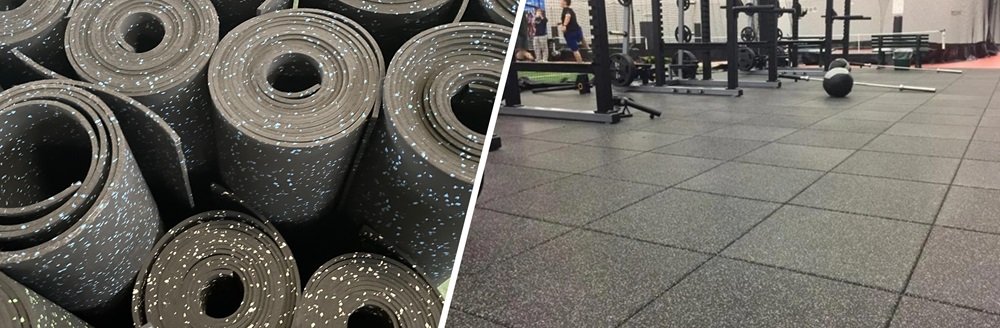
Rubber rolls best for: Large, continuous spaces with minimal seams, gyms, fitness centers (main workout areas), commercial hallways, corridors, retail spaces, large play areas, industrial settings.
Pros:
- Seamless Appearance: Fewer seams create a clean, monolithic look and can make a space feel larger.
- Easier to Clean: Fewer seams mean fewer places for dirt, moisture, and bacteria to collect.
- Faster Installation for Large Areas: Professionals can install rolls much quicker over big, open spaces.Cost
- Effective for Big Projects: Often lower material cost per square foot for large installations.
Cons:
- Difficult DIY Installation: Heavy, bulky, and requires precise cutting and special adhesives. Professional installation is highly recommended.
- Difficult to Transport: Large, heavy rolls require special delivery and handling.
- Hard to Repair: If damaged, a large section often needs to be patched or replaced.
- Site Preparation: Requires a perfectly smooth and level subfloor.
Rubber tiles best for: DIY projects, modular needs, and spaces requiring design flexibility. More common in home gyms, garages, weight rooms, playronns, schools, offices, commercial spaces, areas with potential for future reconfiguration.
Pros:
- DIY-Friendly: Easier to handle, transport, and install. Many use interlocking systems (no glue) or peel-and-stick backing.
- Easy to Replace: Damaged tiles can be individually removed and swapped out.
- Design Flexibility: Can create patterns, borders, and logos. Easily mix colors.
- Adaptable to Imperfect Subfloors: Interlocking tiles can bridge minor subfloor imperfections better than rolls.
- Portability & Reconfiguration: Interlocking tiles can be disassembled and moved.
Cons:
- Visible Seams: The grid pattern is always visible, which some may find less attractive.
- More Seams to Clean: Seams can trap dirt and moisture if not properly locked or sealed.
- Potentially Higher Cost: Often a higher price per square foot compared to roll goods.
- Time-Consuming for Large Areas: Installing individual tiles over a vast space takes longer than rolling out a sheet.
Final Recommendation:
For most home gyms, garages, and DIY projects: Start by looking at rubber tiles. They offer the best balance of durability, ease, and value for those spaces.
For large commercial, institutional, or professional athletic facilities: Rubber rolls are often the industry standard for their seamless finish and durability under constant, heavy traffic.


